


If you’ve ever snapped a drill bit halfway through a job, watched it slip and scratch your workpiece, or wondered why it’s taking forever to make a simple hole — chances are the problem wasn’t your drill. It was the bit.
Drill bits aren’t one-size-fits-all. The right bit depends on what material you’re drilling into, how big and how clean the hole needs to be, and what kind of drill you’re using. Here’s a practical guide to help you pick correctly and get longer life out of every bit you buy.
Types of Drill Bits and What They’re For
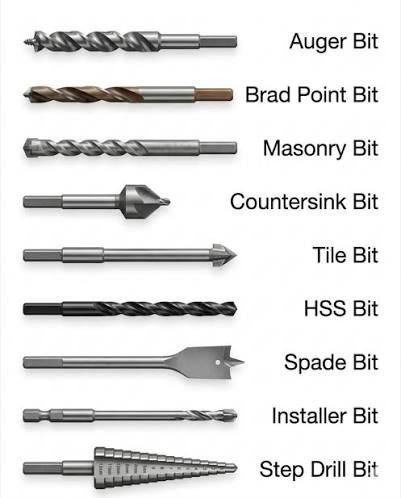
Twist Bits (HSS – High Speed Steel)
The most common all-purpose bit. Good for wood, plastic, and light-gauge metal. Affordable and widely available, but not built for masonry or hardened steel.
Masonry Bits
Have a carbide tip designed to punch through brick, concrete, and block. Used with a hammer drill for best results — a regular drill will work slower and wear the bit out faster.
Cobalt Bits
Built for harder metals like stainless steel and cast iron. They handle heat better than standard HSS bits, which means less snapping and longer life on tough jobs.
Hammer Drill Bits (SDS Max/ SDS-Plus)
Similar to masonry bits but with a grooved shank designed to lock into hammer drills and rotary hammers, allowing the tool’s hammering action to transfer directly into the bit. Best for heavy-duty concrete and stone drilling — faster and more durable than a standard masonry bit under repeated hammer-action use.
Titanium-Coated Bits
These are HSS bits with a titanium nitride coating. The coating reduces friction and heat, extending the life of the bit — a good middle-ground choice if you’re drilling a mix of wood and soft metal regularly.
Spade (Flat) Bits
Used for larger holes in wood, especially for wiring and plumbing work. Fast but leaves a rougher hole than a twist bit.
Auger Bits
Also for wood, but designed for deep, clean holes with a screw-tip that pulls the bit through — useful for thick timber.
How to Match the Bit to the Material
Softwood / Plywood — Standard twist bit (HSS)
Hardwood — Titanium-coated or brad-point bit
Mild Steel — HSS twist bit
Stainless Steel / Cast Iron — Cobalt bit
Brick / Concrete / Block — Masonry (carbide-tipped) bit with a hammer drill bit
Tile / Glass — Diamond-tipped or spear-point bit, low speed
Plastic / PVC — Standard twist bit, slow speed to avoid melting
Getting the Size Right
Drill bit sizes are usually marked in millimeters (mm) on the shank, but on older or imported sets you may see imperial (inch) markings instead — check before you buy a set for a job where measurements matter, like plumbing or fixture mounting.
A simple rule for wood screws: use a bit slightly smaller than the screw’s shaft diameter, so the screw has something to grip. For anchors and wall plugs, always match the anchor manufacturer’s recommended hole size exactly — too loose and the anchor won’t hold, too tight and it won’t seat properly.
Tips for Using Drill Bits Correctly (and Making Them Last Longer)
- Start slow, then speed up. Especially on metal and tile, starting at low RPM prevents the bit from wandering off your mark. Once it bites, you can increase speed.
- Use a center punch on metal. A quick dent with a center punch before drilling stops the bit from skating across the surface.
- Let the bit do the work. Pushing too hard generates heat and dulls the bit faster — apply steady, moderate pressure and let the drill’s speed do the cutting.
- Keep it cool on metal. For steel and stainless steel, a drop of cutting oil (or even water for light jobs) reduces heat buildup significantly and extends bit life.
- Clear the flutes on deep holes. Pull the bit out periodically on deeper holes to clear debris — this is especially important in masonry, where dust buildup slows the bit and causes overheating.
- Match the drill to the job. A standard drill/driver works fine for wood and light metal, but masonry work needs a hammer drill, and heavy-duty steel work benefits from a drill press for consistent pressure and angle.
When to Replace a Bit
The tip is visibly rounded or discolored (a blue or purple tint from overheating on metal bits)
It’s taking noticeably longer to drill the same material it used to cut easily
The bit wobbles or the hole comes out oversized or off-center
Buying quality bits and matching them correctly to the job will save you far more in the long run than the small extra cost of buying the wrong cheap bit twice.
Looking for the right drill bit for your project? Jamali Tools stocks a full range of twist, masonry, cobalt, and specialty drill bits from trusted brands at our Nawabpur Road location in Dhaka. Browse our Cutting Tools collection or request a quote for bulk orders.